Cairn
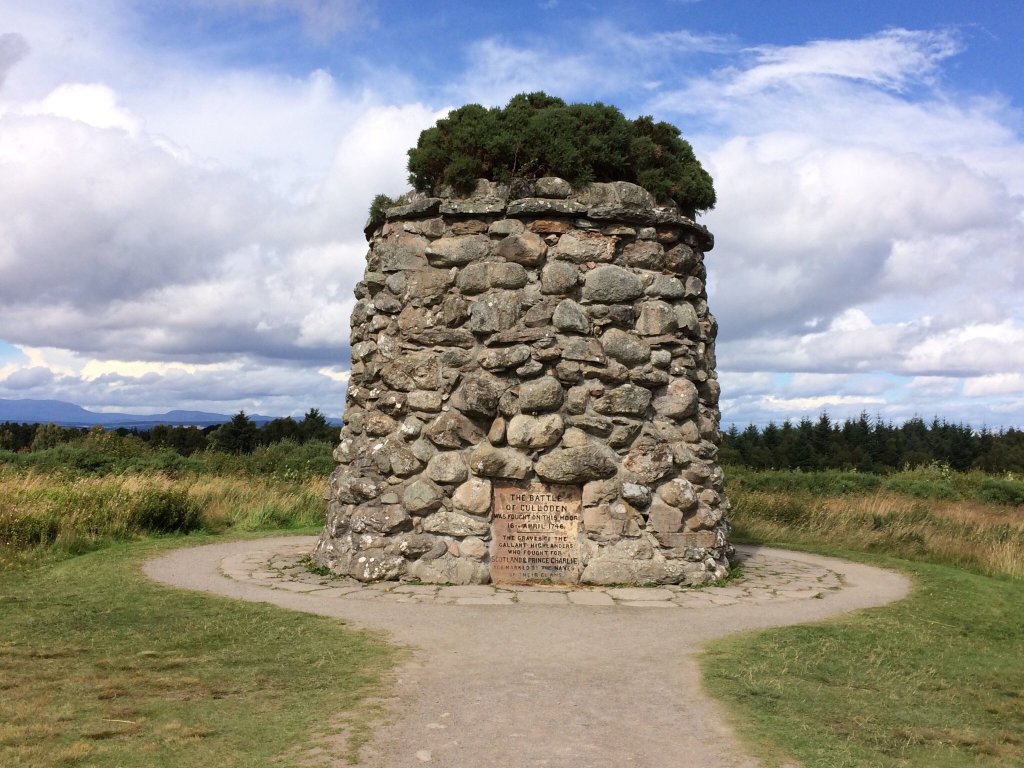
The memorial cairn was erected by the Laird of Culloden, Duncan Forbes, in 1881. The cairn reads “THE BATTLE OF CULLODEN WAS FOUGHT ON THIS MOOR 16TH APRIL 1746 | THE GRAVES OF THE GALLANT HIGHLANDERS WHO FOUGHT FOR SCOTLAND & PRINCE CHARLIE ARE MARKED BY THE NAMES OF THEIR CLANS.” The 20-foot prominence of this memorial structure helps to sustain the myth that the Jacobite Uprising was primarily fought by Highland Clansman despite historical records that show at least one third of the Jacobite army was made up of Lowlanders, English, French, & Irish men. By noting “Gallant Highlanders” and by enlarging “Scotland & Prince Charlie” on the stonework, the cairn also suggests that the Jacobite Uprising was contained to Scotland and fought only by noble Highlanders for who they believed was the rightful king of Scotland—James Stuart—as Charles Edward Stuart is offered his princely title. Jacobites, however, were not only Scottish as they involved individuals from across the British isles and continental Europe. They also viewed James Stuart as not only the King of Scotland, but also the King of Britain.
Click here for my replica
Leanach Cottage
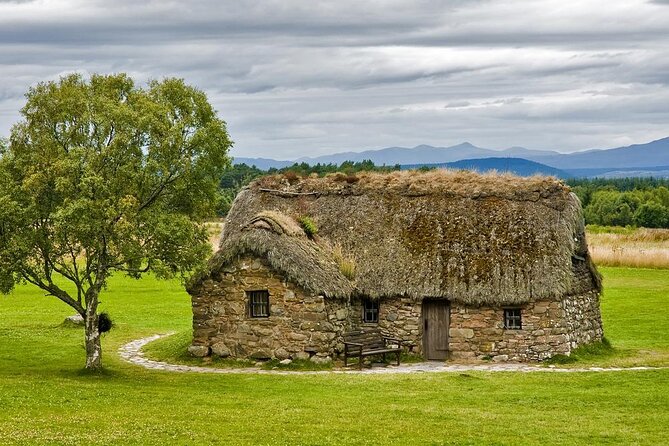
Historical reports indicate that Leanach Cottage was used as a hospital for the “Redcoats”—British government troops under the command of the Duke of Cumberland. The cottage was used for farming tenants then fell into disrepair, demolished, rebuilt and altered. Belle MacDonald was the last tenant of the cottage and she gave tours of the Culloden Battlefield until her death in 1912. The cottage later became a the site’s visitor centre in 1961. The roof has seen the most changes and the current steeply-pitched thatched roof reflects the cottage’s earliest design.
Click here for my replica
Headstones
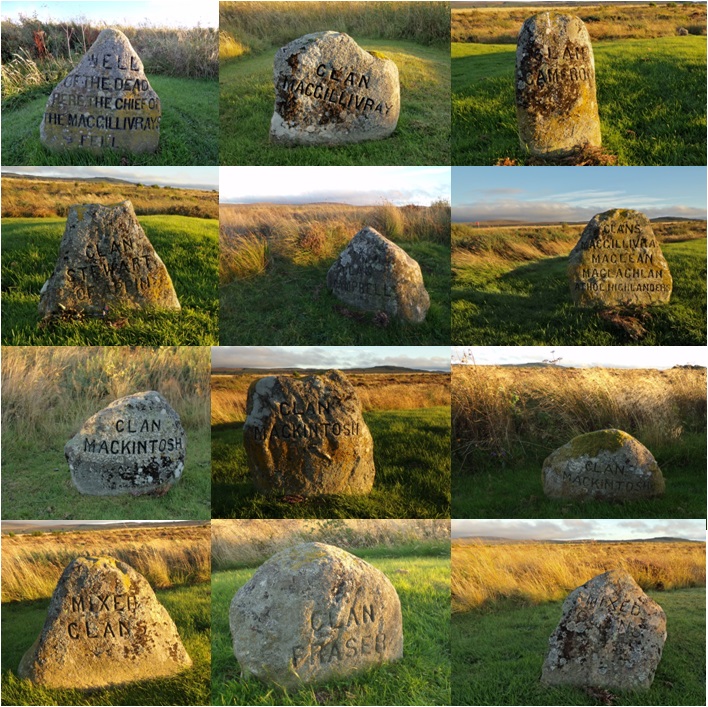
The headstones were also erected by Duncan Forbes who aimed to mark the gravesites of those who fell in the Battle of Culloden. They emphasise the familial clanship narrative that illustrates the Jacobite Uprising as an inevitable defeat of Highland clansman by an elite English foe. They also attract visitors who embark on pilgrimages to remember their ancestors’ noble but doomed enterprise. These visits encourage support in resources to conserve sites of memory.
Click here for my replica
 Remembering Culloden